Why We Measure Paint Thickness
Before Touching a Polisher
A depth gauge reads total film thickness in microns, and a correction session removes roughly 0.5 to 2 of them. Readings vary across a car: repainted panels read differently, and a vehicle polished repeatedly at a cheap shop reads thin exactly where people polish most. Sometimes the honest answer is your paint cannot take the correction level you wanted.
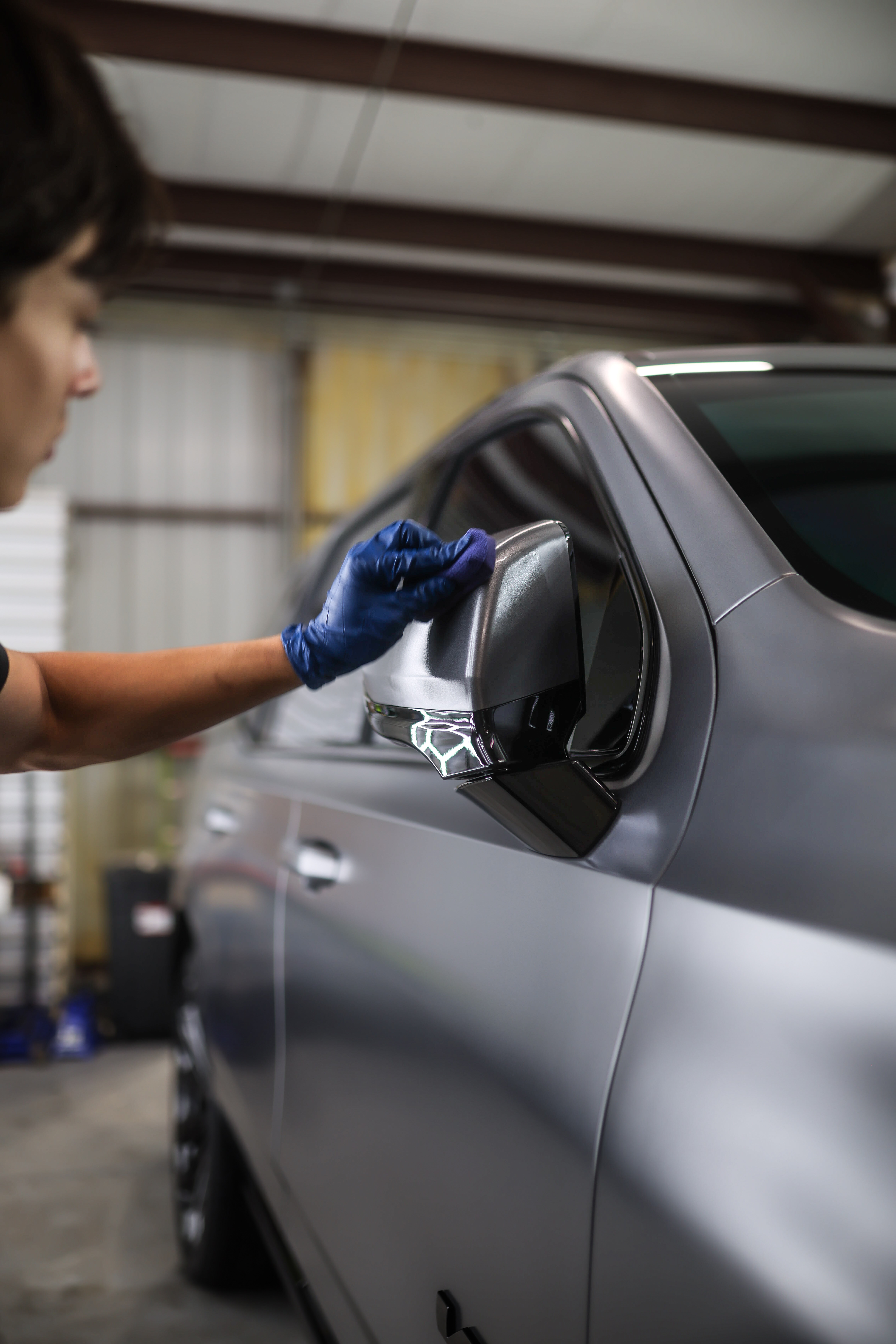
Every paint correction removes a small amount of clear coat. That's not a flaw in the process, it's how the process works — but it means clear coat is a finite resource, and a shop that doesn't check how much you have left is guessing with something you can't get back.
What the Gauge Actually Tells Us
A paint depth gauge reads total film thickness on each panel in microns. Factory clear coat is typically somewhere around 100 to 150 microns of total film, and a correction session removes roughly 0.5 to 2 microns depending on how aggressive it needs to be. One session is a small fraction. Several sessions, or one careless one, is not.
Why Readings Vary Across a Car
They almost always do. A panel that's been repainted reads differently from factory panels. A car that's been polished repeatedly at a cheap shop can read thin in exactly the places people polish most — hood, roof, trunk lid, and the high points of fenders. Those readings tell us where we can work and where we shouldn't.
What Happens When Nobody Checks
Clear coat failure. Once you polish through, there's no fixing it with more polishing — the panel needs repainting. It usually shows up on edges and body lines first, because that's where the clear is thinnest and where an inexperienced operator applies the most pressure.
What This Means for Your Quote
Sometimes the honest answer is that your paint can't take the correction level you were hoping for. We'd rather tell you that and do a safer single-step than sell you a three-step your clear coat can't survive. It's also why we don't quote correction sight-unseen over the phone.
Worth asking any shop: do you take paint thickness readings before correcting, and can I see them? A shop that measures will happily show you. A shop that doesn't own a gauge is making decisions about your clear coat by feel.
If your vehicle has been polished before, or has had body work, the readings matter even more. Bring it by — the measurement takes minutes and it's the difference between a plan and a guess.
Related Reading
Ready to Protect Your Vehicle?
We'll inspect your paint and tell you exactly what it needs — we will share current appointment availability.
Keep Your Coating Performing.
Founding memberships are $99 for Exterior Detail, $149 for Full Detail, or $249 for Premium Detail. Each option has one set rate for qualifying cars, trucks, and SUVs.