Waterless & Rinseless Washing:
Do They Work Out Here?
Look at the car in direct light: if you see distinct dust rather than a faint haze, it needs water first. If a fingertip drawn across the hood leaves a visible line, do not reach for a waterless product. Caliche is hard and angular, so wiping it across clear coat with a towel is functionally sanding. These products are fine on a light film, not on real dust.
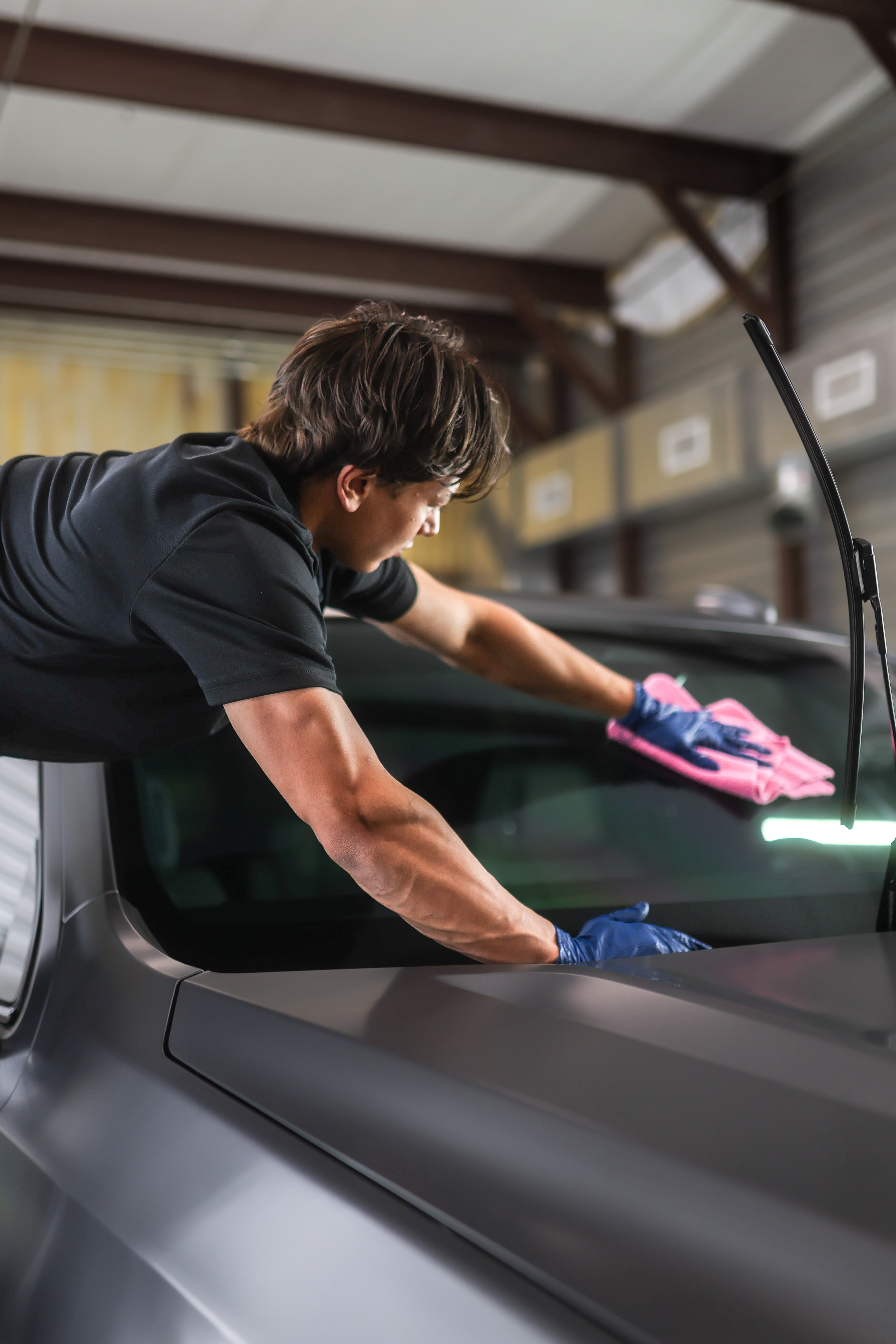
These products get recommended constantly, and in the right situation they're genuinely useful. In the wrong one — which is most Lubbock situations — they put fine scratches in your paint. The difference comes down to how much grit is on the car.
What They Actually Are
Waterless washes are spray-on lubricating solutions you wipe off with microfiber, no rinsing. Rinseless washes are a diluted solution in a bucket, wiped on and dried off without a hose rinse. Both remove the rinse stage, which is exactly the stage that protects your paint from the grit already sitting on it.
Where They're Fine
A garage-kept vehicle with a light film of dust after a few days. A coated car that mostly needs the surface refreshed. Interior glass and door jambs. Quick touch-ups between real washes. In all of those, there isn't enough abrasive material on the surface to do damage.
Where They Cause Damage in Lubbock
After a wind event. After any drive on caliche or unpaved shoulder. Anytime the car is visibly dusty rather than lightly filmed. Caliche is a hard, angular particulate — wiping it across clear coat with a towel is functionally sanding, no matter how much lubricant the bottle claims.
The Practical Rule
Look at the car in direct light. If you can see distinct dust rather than a faint haze, it needs water first. If a fingertip drawn across the hood leaves a visible line in the dust, do not reach for a waterless product. That's a rinse-first situation, full stop.
If water access is the constraint, a pump sprayer with plain water to knock the grit off before a rinseless wash gets you most of the safety of a hose. It's the pre-rinse that matters, not the pressure.
Used within their limits these products are fine and we use rinseless methods ourselves in the right conditions. Used on a dusty West Texas vehicle, they're one of the faster ways to build the swirl haze we get paid to remove later.
Related Reading
Ready to Protect Your Vehicle?
We'll inspect your paint and tell you exactly what it needs — we will share current appointment availability.
Keep Your Coating Performing.
Founding memberships are $99 for Exterior Detail, $149 for Full Detail, or $249 for Premium Detail. Each option has one set rate for qualifying cars, trucks, and SUVs.