How to Wash a Car
While Reducing Swirl Marks
No contact wash can promise zero new marks, but careful technique can reduce the risk. Pre-rinse loose soil, use clean and well-lubricated wash media, work from cleaner areas toward dirtier ones, keep wheel tools separate, and dry with clean microfiber using minimal pressure.
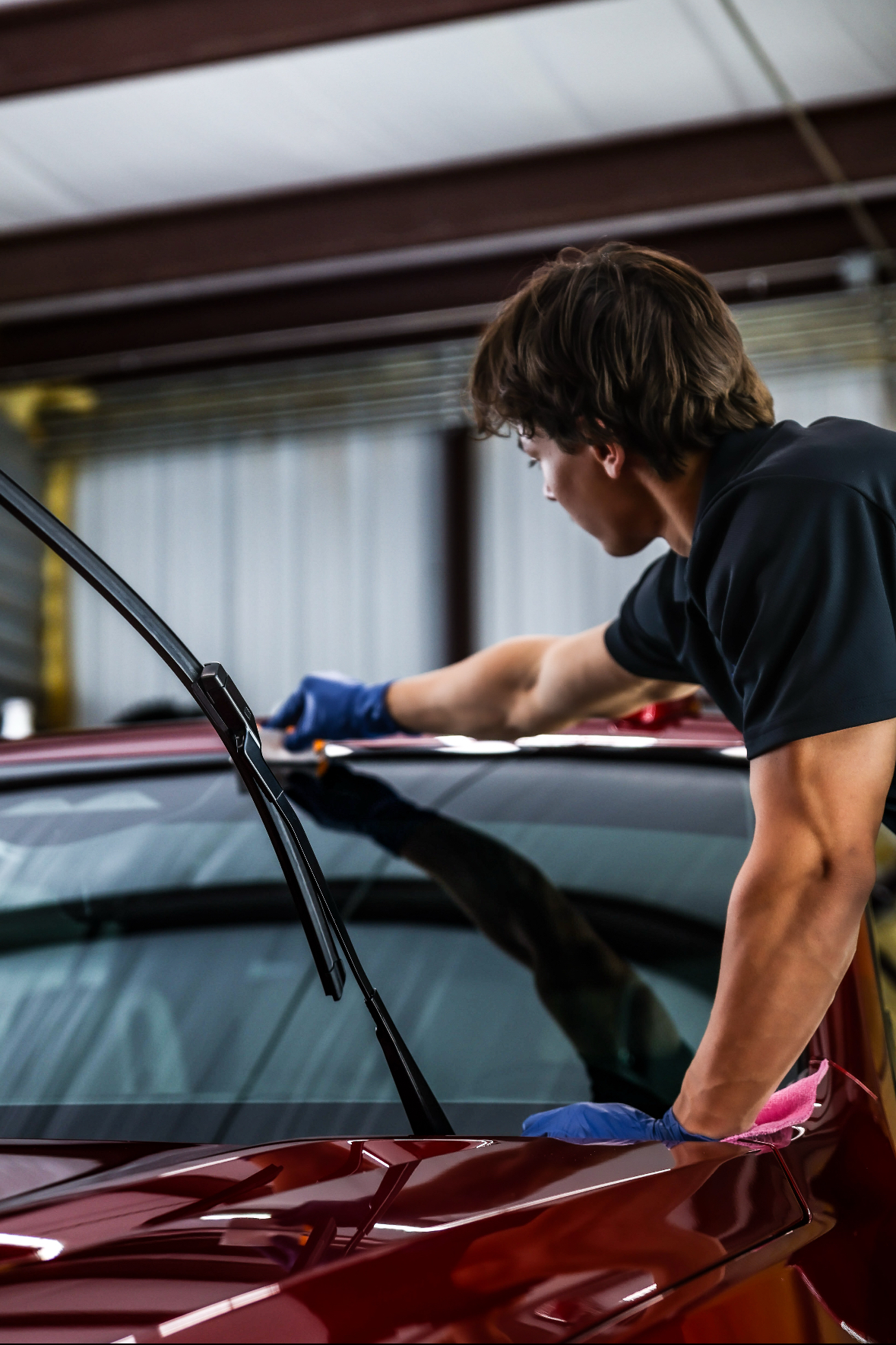
Fine, circular-looking marring is often easiest to see in direct light. It can develop when contamination is moved across the finish during washing, drying, dusting, or other contact. Careful technique reduces that risk, but no contact wash makes every paint system scratch-proof.
Rinse Before You Touch Anything
Remove as much loose soil as practical before contact washing. Lubbock vehicles can carry windblown dust and road residue; moving that contamination under a mitt can increase marring. Use a controlled rinse that follows the vehicle and equipment instructions. A compatible pre-wash may help loosen residue, but it does not replace rinsing, clean media, or inspection.
The Two-Bucket Method, and Why It Works
One bucket holds the wash solution and another is used to rinse the wash media before reloading it. The goal is to separate removed soil from the cleaner solution. A bucket insert may help keep some settled debris away from the mitt, but it is not a guarantee; inspect and replace dirty media and solution as needed.
Wash Top-Down, and Save the Worst for Last
Lower panels and areas behind the wheels often carry heavier road soil. Work from cleaner areas toward dirtier ones and use dedicated tools for wheels, tires, and paint. Do not move a tool exposed to wheel cleaner or coarse wheel residue onto painted body panels.
Drying Is Where People Undo the Whole Wash
Drying adds another contact step, so towel cleanliness, material, pressure, and lubrication matter. Use clean microfiber intended for automotive drying, blot or glide with minimal pressure, and stop if the towel picks up soil. Tap-water droplets can leave mineral residue as they evaporate; prompt paint-safe drying reduces that exposure, but existing etching or deposits may require separate inspection.
What This Won't Fix
Washing will not remove clear-coat defects. Machine polishing may improve suitable marring after inspection and a test area, but deeper damage, thin paint, previous repairs, or failing clear coat can limit what is safe. Better washing can reduce new contact damage; it cannot guarantee that marks never return.
Keep wheel and paint tools separate. Dedicated, labeled tools reduce the chance of transferring wheel cleaner, brake residue, and coarse contamination onto body paint. Replace or thoroughly clean tools when their condition is uncertain.
If the paint shows a haze of fine lines in direct light, bring it by for inspection. Some defects may respond to machine polishing; others may be too deep, may reflect prior repair, or may need a different solution. Photos can help with initial context but do not replace an in-person test area.
Related Reading
Ready to Protect Your Vehicle?
We'll inspect the visible condition, explain what detailing may address, and share current appointment availability.
Keep Your Coating Performing.
Founding memberships are $99 for Exterior Detail, $149 for Full Detail, or $249 for Premium Detail. Each option has one set rate for qualifying cars, trucks, and SUVs.