Paint Correction Near Me:
What to Look for Before You Book
Clear coat does not grow back: you have 50–100 microns on a new vehicle and it can only be polished so many times. That is why cheap correction is a bad deal: a shop cutting aggressively to show a fast result is spending a resource you cannot replace. Every correction here starts with inspection and paint thickness measurement across all panels before quoting.
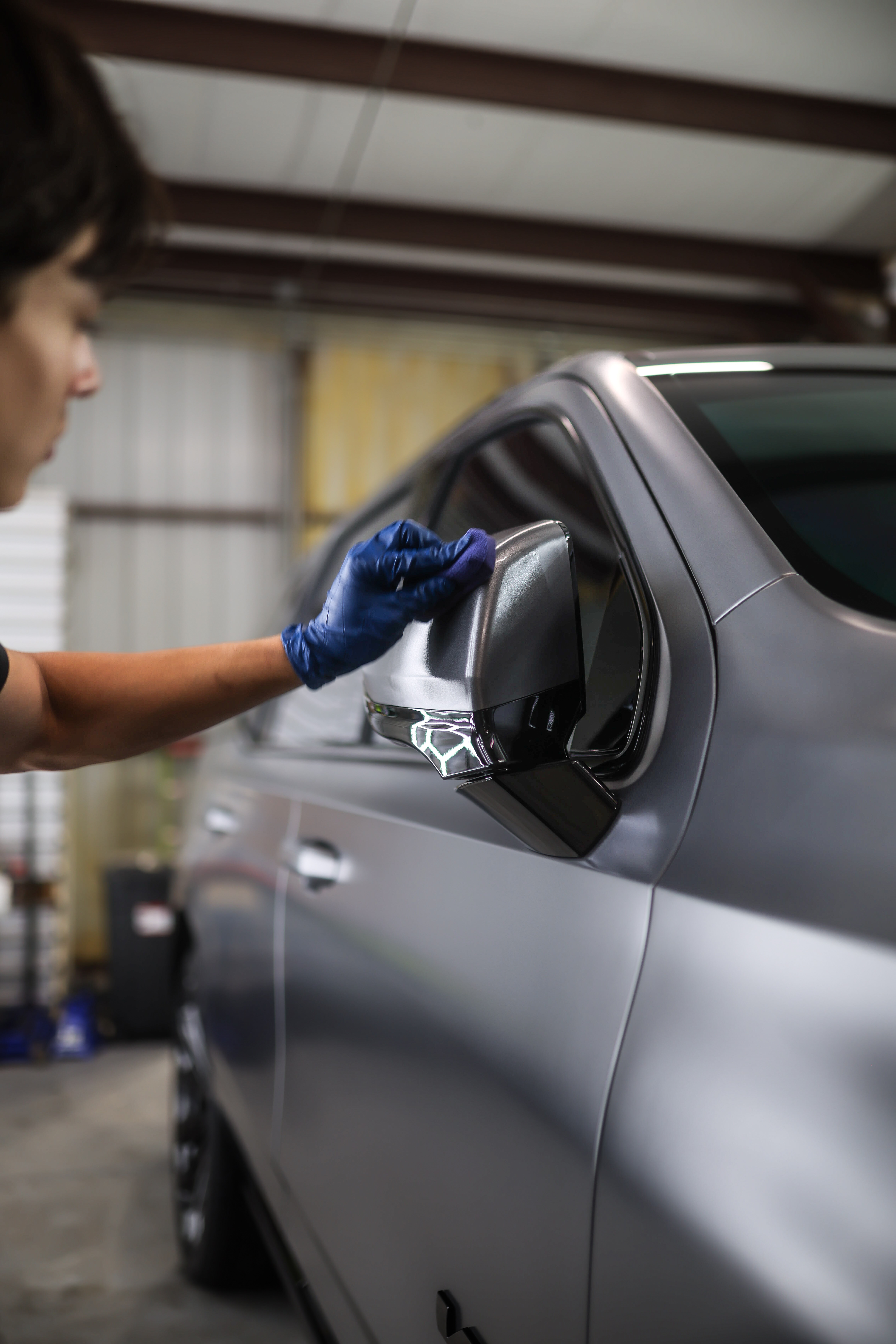
Searching "paint correction near me" gives you a list. What it doesn't tell you is which of those shops will actually fix your paint and which ones will make it worse. Those are not the same thing — and the difference matters a lot when you're talking about clear coat that can't be replaced without a full respray. If you're specifically looking for paint correction in Lubbock TX, here's what to look for.
This is what you actually need to know before you hand your keys over to anyone.
What Paint Correction Actually Is
Paint correction is machine polishing — a rotary or dual-action polisher with cutting compounds and pads used to remove a thin layer of clear coat, taking the defects with it. Done right, it removes swirl marks, scratches, water spots, oxidation, and haze. Done wrong, it can cause buffer trails, thin out your clear coat unevenly, or burn through to the base coat on panel edges.
It's a skilled process. There's no way around that. The person doing it needs to know how to read paint, select the right compound and pad combination, control machine speed and pressure, and work methodically across each panel. A guy with a borrowed polisher and a YouTube education is not the same as someone who's done hundreds of corrections.
The goal of paint correction is to remove as few microns of clear coat as possible while eliminating as many defects as possible. Cutting too aggressively removes more than necessary. Not cutting enough leaves the defects. The balance is experience.
The Questions Worth Asking
Before you book anyone for paint correction, ask these:
Do they measure paint thickness?
A paint thickness gauge tells you exactly how much clear coat is on each panel before any polishing begins. This matters because some panels — edges, hood, roof — are naturally thinner and can't handle the same level of cut as thicker areas. A shop that doesn't measure is guessing. A shop that does measure can tailor their approach panel by panel and tell you honestly what's possible without risking burn-through.
Do they correct before they coat?
If a shop offers ceramic coating, find out if they offer paint correction first — and whether they require it or just offer it as an upsell. Any shop that will coat over uncorrected paint is telling you something: they either don't understand what they're doing, or they don't care. A coating locks in whatever's underneath it permanently. Swirls coated over are swirls forever.
Can they show you previous work?
Before and after photos under proper lighting — not just bright sun — are the honest test. Swirl marks disappear in direct sunlight. They show up under shop lights, paint correction lights, or any indirect lighting. If a shop's photos are all taken outside in the sun, they're hiding something. Look for reflection clarity, depth, and uniformity across panels.
What products and machine do they use?
You don't need to be an expert, but the answer tells you something. Professional-grade compounds and pads from brands like CarPro, Menzerna, or Koch-Chemie paired with a quality machine polisher indicates someone who takes the work seriously. "I use what I can find at Walmart" is a different situation.
Red Flags
- No paint thickness measurement before starting
- Flat-rate pricing with no inspection ("$99 paint correction" on any car)
- Will coat paint without correcting it first
- Only outdoor photos in direct sunlight
- Can't explain what compounds or pads they use
- Turnaround time under 3 hours for a full correction
- Won't give a written quote after inspecting the vehicle
Good Signs
- Uses a paint thickness gauge before touching the car
- Quotes are based on an actual inspection, not just vehicle size
- Shows work in controlled lighting, not just outdoor shots
- Explains the difference between a single-step and multi-step correction
- Requires or strongly recommends correction before any ceramic coating
- Has a defined process they can walk you through
- Will tell you honestly what they can and can't fix
Why "Cheap" Paint Correction Is a Bad Deal
Clear coat doesn't grow back. You have somewhere between 50–100 microns of it on a new vehicle, and it can only be polished so many times before you're cutting into base coat. A shop that cuts aggressively just to show dramatic results — without caring about how much they're removing — costs you future correction capacity.
You're also paying for someone to work on paint that cannot be easily undone. If they burn through an edge or leave buffer trails across a panel, the fix is a respray. That's a $500–$1,000 problem per panel at a body shop. The $150 you saved on the correction won't cover it.
Good paint correction isn't cheap because it takes time, skill, and proper equipment. A thorough two-step correction on a sedan takes most of a full day. Anyone pricing it at $99–$150 is either cutting it in 90 minutes (not a correction, just a wipe down with polish) or they're new enough that you're paying to be their practice vehicle.
What to Expect at Delicate Details
Every correction we do starts with a full inspection and paint thickness measurement across all panels. We don't quote corrections without looking at the car — because the condition of the paint determines everything: what compounds to use, how aggressive to cut, and what's realistically achievable without risking the clear coat.
We offer four tiers of paint correction from a paint enhancement all the way to a three-step correction for vehicles going to ceramic coating or high-end builds. Every job includes a proper prep wash and decontamination before any polishing starts. We don't rush it — a two-step correction takes most of a day, and that's by design.
If you're planning on a ceramic coating afterward, we handle both in one appointment. The correction always comes first — that's non-negotiable on anything we put a coating on.
Related Reading
Want an Honest Assessment of Your Paint?
Send us photos or bring the car by. We'll tell you exactly what it needs and get you scheduled — most clients booked within 48 hours.
Protect the Investment Every Month.
After paint correction, careful washing matters. Membership options are $99 for Exterior Detail, $149 for Full Detail, or $249 for Premium Detail.